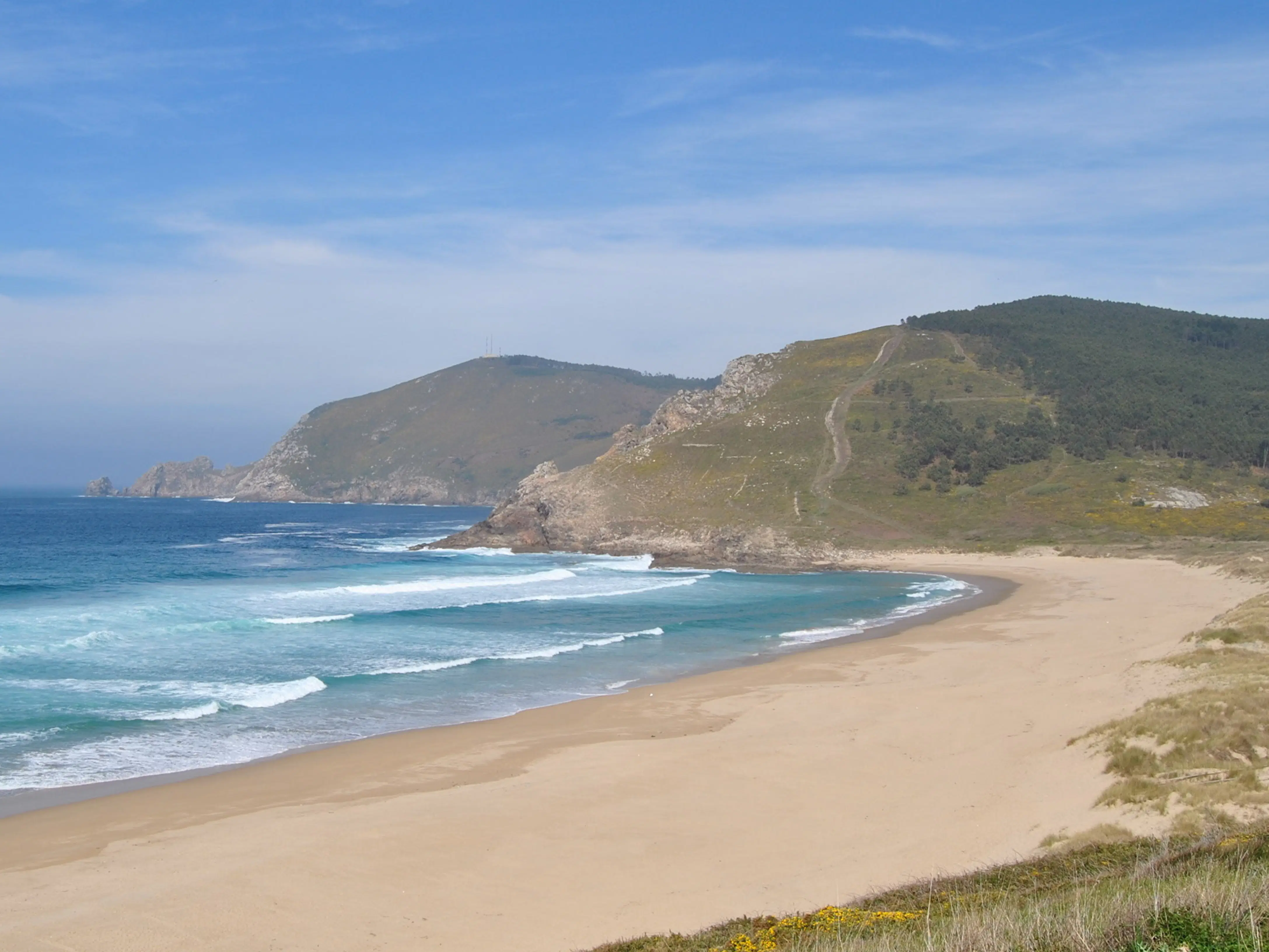
Praia de Mar de Fóra
15 min walk
This wild, open ocean beach provides a quiet contrast to the lighthouse area and is ideal for observing the Atlantic swells.

Every timetable search for the Costa da Morte ends the same way: the map simply runs out of track. This santiago to finisterre train guide explains what the Galician rail network actually covers, where it stops, and what fills the gap to the cape. It also sets out what to expect at Kilómetro 0 once you get there.
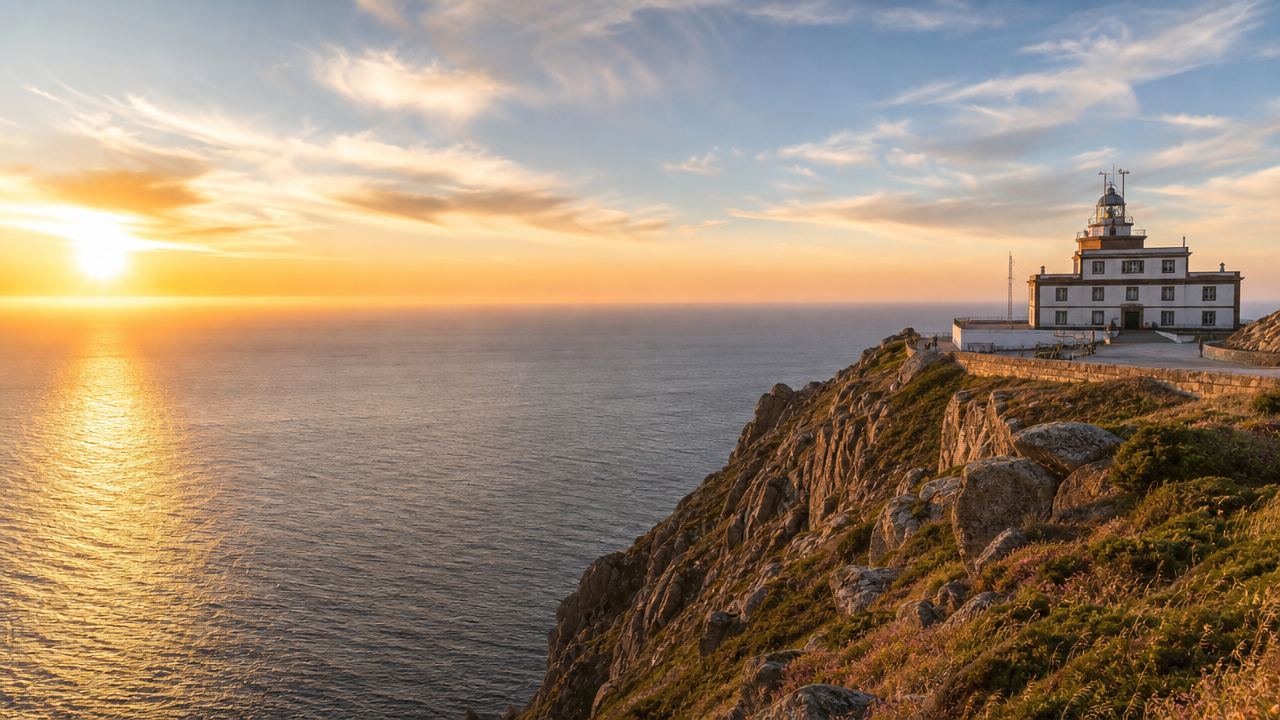
Quick answer
There is no santiago to finisterre train — no railway line reaches Cape Finisterre, and the nearest passenger rail terminates at Santiago de Compostela's Estación Intermodal, roughly 90 kilometres away. Road transport covers the final stretch to Fisterra. The cape itself needs no ticket: entry to the lighthouse grounds is free, 0 EUR, and the open headland is accessible 00:00–23:59, seven days a week.
Galicia's railway network stops roughly ninety kilometres short of the Atlantic. No track has ever been laid west of Santiago de Compostela into the Costa da Morte, and none is planned. Travellers searching for a santiago to finisterre train almost always land in the same place: the Estación Intermodal de Santiago, where Adif's platforms sit directly above the regional coach bays. The building's name gives the answer away. Rail brings visitors to the Galician capital; road carries them the rest of the way to the cape. Understanding that split early saves an afternoon of fruitless timetable searching. The reason is geography as much as economics. The Costa da Morte is a shredded coastline of rías, granite headlands and villages scattered across steep ground — expensive terrain for engineers and thin traffic for any operator. For centuries the region moved by sea, then by road, and the Ría de Corcubión was crossed by boat long before asphalt reached it. That history still shapes every Fisterra day trip from Santiago. It also explains why the most traditional approach is on foot: the Camino de Fisterra runs about eighty-eight kilometres from the cathedral through Negreira, Olveiroa, Cee and Corcubión, a three- or four-day walk that ends at the Kilómetro 0 waymarker beside the lighthouse. What waits at the end is a working navigational station rather than a museum. The Faro de Fisterra has thrown its beam across the Atlantic since 1853, set on a headland the Romans read as the edge of the known world. Behind it, Monte Facho rises above the lighthouse road, and the sand of Praia do Mar de Fóra faces open ocean a short walk from the village. The address is plain enough for any driver or coach to follow: Faro de Fisterra, 15155 Fisterra, A Coruña. There is no gate, no turnstile and no ticket desk, which changes how a visit should be planned — arrival time matters far more than admission. Readers who came here hunting a santiago to finisterre train can treat the absence as useful information rather than a setback. With no fixed rail departure to catch in either direction, the day bends around daylight, tides and weather instead of a printed schedule. Ask in Galician for a tren de Santiago a Fisterra and the answer stays the same: it does not exist, and it never has.
“Rail brings visitors to the Galician capital; road carries them the rest of the way to the cape.”
There is no direct train connection between Santiago de Compostela and Cape Finisterre. Travelers must rely on bus services or private transport to reach the coast from the city.
Monbus service from Santiago de Compostela Bus Station to Fisterra
AC-441 and AC-445 routes to Faro de Fisterra
Direct transfer from Santiago to Faro de Fisterra
The bus drops passengers in the town of Fisterra, requiring a final 3-kilometer walk or a short local taxi ride to reach the lighthouse at the cape.
Cape Finisterre is an outdoor public landmark accessible to visitors at all times. The lighthouse grounds and cape area remain open daily throughout the week.
Access to the Cape Finisterre lighthouse grounds and the surrounding cape area is provided to the public at no cost. There are no entrance fees required to visit this landmark.
Verdict: A typical visitor pays 0 EUR, as there are no admission fees for this public landmark regardless of the time or day.
The best time to visit Cape Finisterre is during the shoulder seasons of May, June, September, and October to balance mild temperatures with manageable visitor numbers. Late afternoon arrival is ideal to experience the landscape during the transition to sunset.
Mild, 15°C to 20°C. Frequent sea breezes.
Vegetation is lush and days are long. Ideal for coastal walks.
Warm, 18°C to 24°C. Often sunny.
The most popular period, resulting in higher traffic at the lighthouse area.
Cooler, 14°C to 19°C. Variable conditions.
A quieter time to observe the Atlantic coast. Weather remains suitable for outdoor exploration.
—
Visiting on a weekday evening provides a quieter atmosphere for viewing the sunset over the Atlantic.
Verdict: The optimal window is late afternoon on a Tuesday, Wednesday, or Thursday during May or September.
Visitors extending their time at Cape Finisterre can explore several historical and natural landmarks within the immediate vicinity. These locations complement the coastal experience by providing deeper insight into the maritime heritage of the region.
15 min walk
This wild, open ocean beach provides a quiet contrast to the lighthouse area and is ideal for observing the Atlantic swells.
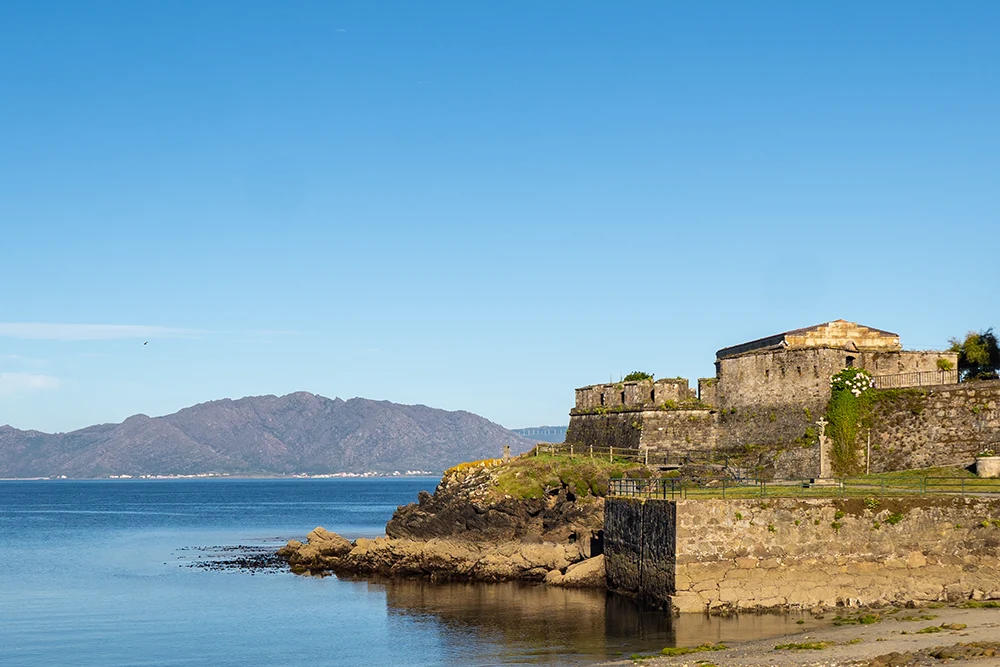
20 min walk
This 18th-century fortress houses a museum dedicated to local maritime history and defenses, located directly in the town of Fisterra.
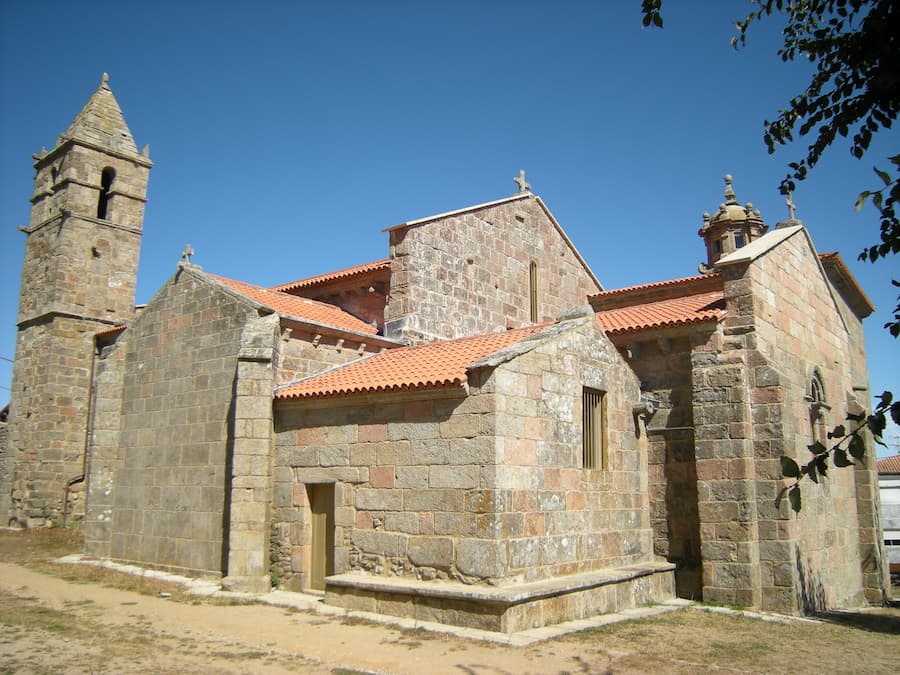
25 min walk
A Romanesque church located at the start of the final climb to the cape, historically significant to pilgrims finishing their journey.
Everything you need to know about santiago to finisterre train
There is currently no direct santiago to finisterre train line connecting these two locations. Travelers looking for rail options often find their journey interrupted by the lack of infrastructure reaching the cape directly.
Most visitors opt for bus services or organized excursions when planning a santiago to finisterre tour. These road-based methods provide the most reliable transit compared to seeking a non-existent rail connection.
The most efficient method to arrive at the coast is by bus or private vehicle from Santiago de Compostela. While many hope for a santiago to finisterre train, regional bus lines operate regularly to the town of Fisterra.
Since a santiago to finisterre train is not available, regional buses serve as the primary public transit link. Rental cars are also frequently used by those who prefer a flexible schedule to visit this landmark.
The lighthouse is an iconic monument located at the end of the Camino de Santiago. Visitors should note the address is Faro de Fisterra, 15155 Fisterra, A Coruña, Spain, and plan for coastal weather conditions.
Yes, the site is an outdoor public landmark and cape, ideal for sunset views at any hour. The area remains open for visitors to experience the coastal atmosphere throughout the night.
Access to the lighthouse grounds and cape area is free for all visitors. There is an entrance fee of 0 EUR to enjoy this location.